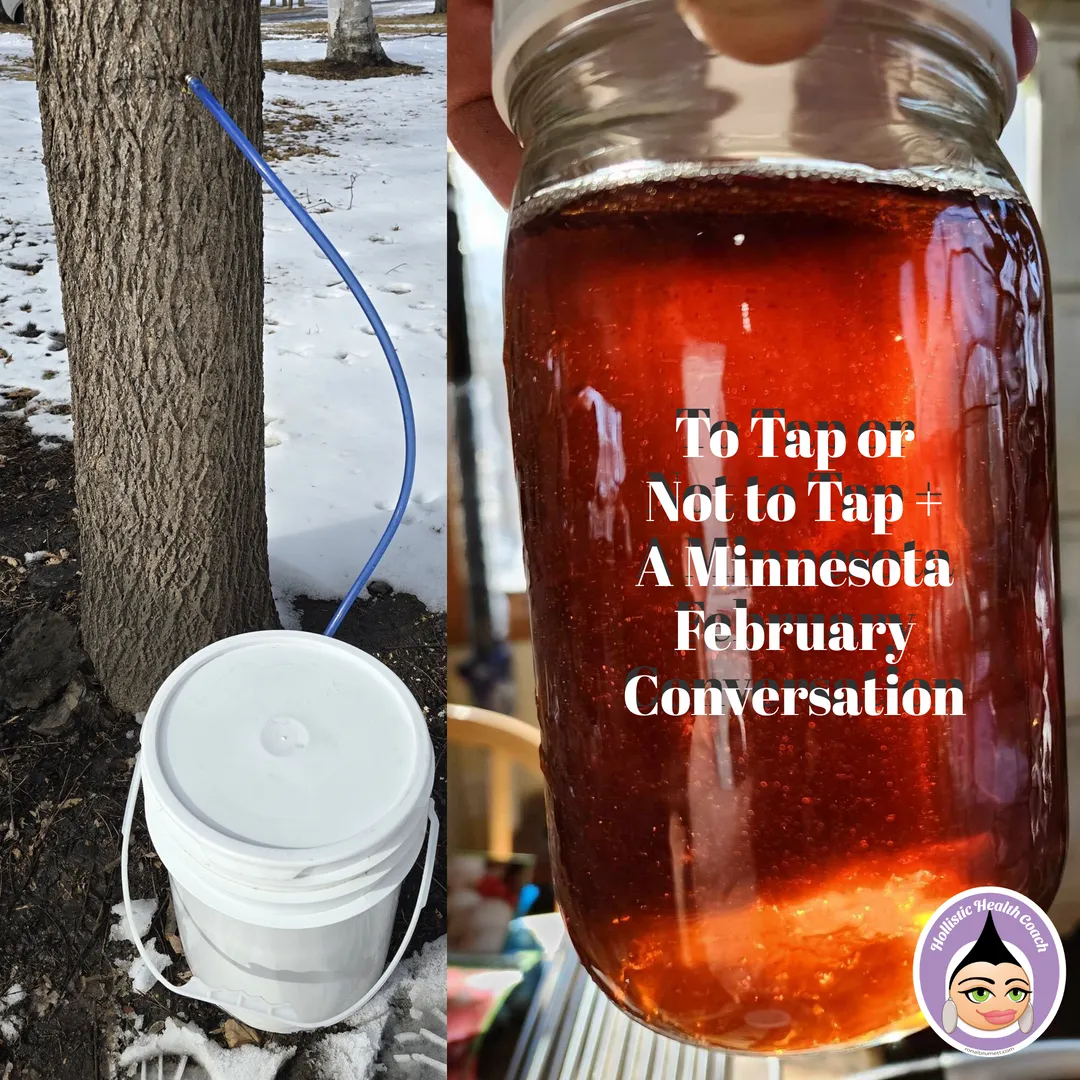
To Tap or Not to Tap A Minnesota February Conversation
Hey, it’s Ronai.
If you live in Minnesota, you know February is that month. It is either brutally cold and
we are questioning our life choices…
Or it gives us just enough sunshine to start dreaming about spring.
And right about now, every homesteader I know is looking at their maple trees thinking:
Is it time?
How Maple Tapping Actually Works
Let’s keep this simple and factual.
Sap flows when:
Daytime temperatures rise above 32 degrees
Nighttime temperatures drop below 32 degrees
That freeze thaw cycle creates pressure inside the tree. When it warms during the day,
internal pressure builds and pushes sap out. When it freezes at night, pressure resets.
No temperature swing. No sap.
So February can work beautifully. Or it can be way too early. The trees decide.
Not us.

How I Approach Tapping
Now here is where I get a little hippie. I love my trees!
Before I drill, I put my hand on the trunk. I thank the tree. I bless it. I remind myself this
is a partnership, not a transaction. Because maple tapping, when done right, does not
harm a healthy tree. It is sustainable. It is careful. It is respectful.
And I want to do it well.

Having problems viewing video, click here - Tapping Maple Trees Part One
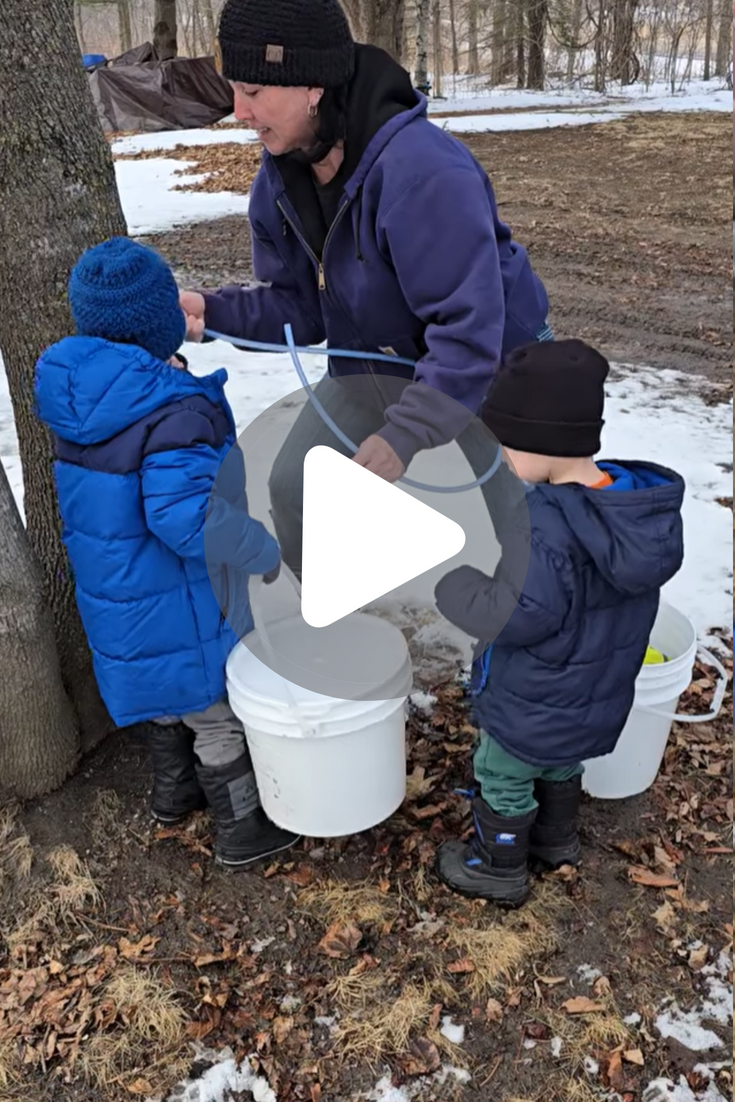
Having problems viewing video click here - Tapping Maple Trees Part Two
The DOs of Maple Tapping
Choose the right trees
Healthy sugar maples at least 10 to 12 inches in diameter. No stressed or damaged
trees.
Tap the south side
That side warms first in the sun and often flows earlier.
Drill correctly
About 1.5 to 2 inches deep. Slight upward angle. Clean bit.
You want a clean hole that allows sap to flow without tearing the bark.
Follow tap guidelines
10 to 18 inch tree gets 1 tap
18 to 25 inch tree gets 2 taps
Over 25 inches can handle up to 3
More taps does not mean more syrup. It means more stress. We are not doing that.
Collect sap daily
Fresh sap makes better syrup. If temps rise, it can spoil quickly.
Boil promptly
It takes about 40 gallons of sap to make 1 gallon of syrup. This is a process. A slow
one. A steamy one. A patience builder.
The DON’Ts That Matter
Do not tap if the weather is consistently below freezing. You are just creating a wound
without benefit.
Do not overtap or redrill old holes. Give trees time to heal each year.
Do not hammer aggressively. Gentle but firm is enough.
Knowing When to Stop
When buds start swelling, the sap chemistry changes. It can turn cloudy or develop an
off flavor called buddy syrup. That is my signal.
When I pull the taps, I thank the trees again. I bless them. I tell them I will see them next
year. Yes, I talk to my trees. No, I am not sorry.

Why This Pulls Me Out of the Winter Funk
Tapping trees gets me outside. It makes me pay attention to:
Subtle temperature shifts
Sun angles
Bud development
The sound of drip into a bucket
It connects me back to the land. It reminds me that even in February, life is moving. And
that matters.
Next up, we are going to talk about that other February itch… seed starting indoors.
What to start now. What to wait on. And how not to end up with tall, leggy plants
because we got too excited.
But first, I am watching the forecast. And if we get that freeze thaw rhythm, I will be out
there.
Hand on tree.
Drill ready.
Grateful for something sweet in the middle of winter.
Are you tapping this year?


