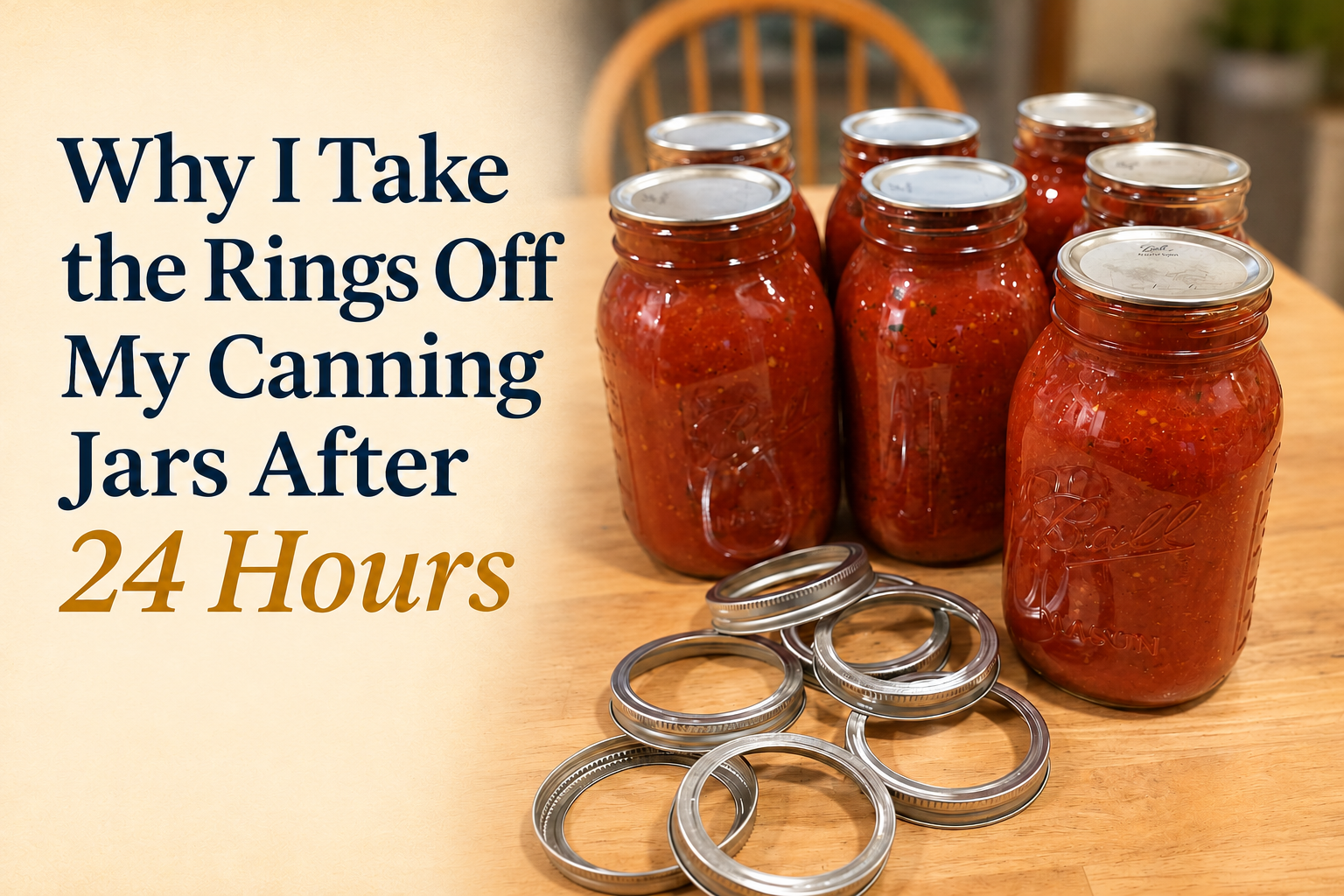
Why I Take the Rings Off My Canning Jars After 24 Hours
Hey, it’s Ronai!
Now that it’s fall and things have slowed down a bit around here (ha! Like it ever actually slows down!), I’ve been pulling things out of the freezer and doing quite a bit of canning. I posted a picture of my jars and reminded everyone to take the rings off 24 hours later. Well, that one little reminder got me a whole lot of questions. The big one was, “Why do you leave the rings off after you’ve checked the seals?”
Lets start at pulling the jars out of the canner and setting them on the counter. I love hearing that first little ping when the jars are cooling on the counter. I’m perfectly happy to leave them alone until the next day. My hubby, on the other hand? He sees a row of jars and suddenly has a burning need to poke a lid. I’m pretty sure he does it just to bug me. And yes, it works.
PLEASE Let those jars cool undisturbed at room temperature for 12 to 24 hours. I give mine the full 24 and tell him he can admire them from across the kitchen.
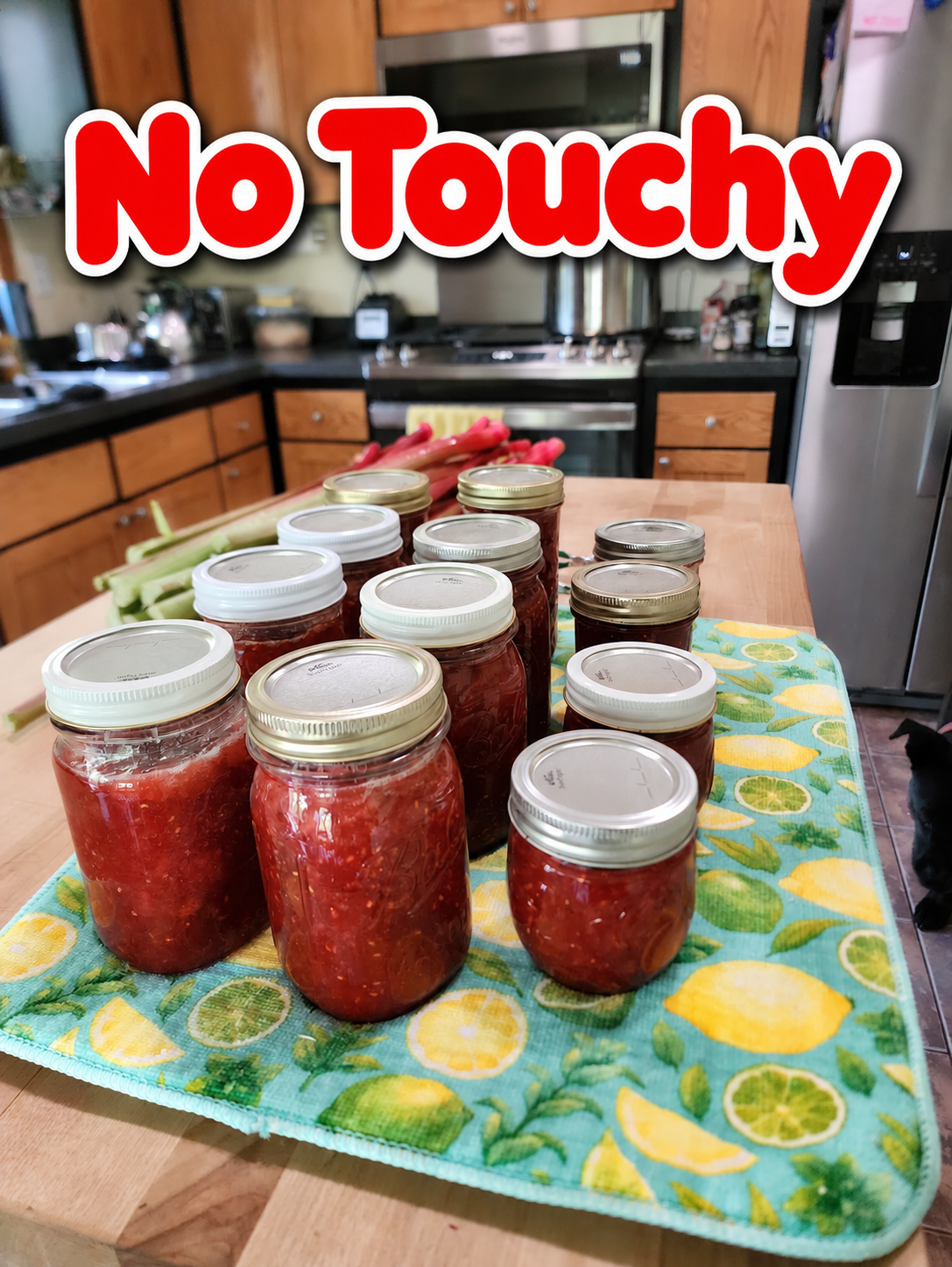
While he’s admiring from a safe distance, let’s talk about what’s happening under that ring. The ring holds the flat lid in place during processing. As the jar cools, a vacuum forms and holds the lid against the rim. That flat lid has sealing compound around its edge, which is why I use a fresh, undamaged flat metal lid every time I can. Standard flat metal lids get one trip through the canner. The rings can come back for another batch as long as they’re clean, dry, and free of rust and dents. Just remember new flat lid, trusty old ring.
The next day, I take the rings off and gently press the center of each lid. If it springs back up, the jar didn’t seal. If it stays down, I like to double-check by gently lifting the jar by the edges of the lid, just barely above the counter. A teeny little lift, friends. There’s no need to raise that jar of jam like you just won a trophy. If the lid lets go, you’ll be glad the counter is right there. How far can jam travel? Oh, I wouldn’t know firsthand or anything. But it’s really far.
That first seal check tells me how the jar looks today. Leaving the ring off helps me see if the seal is still holding weeks or months later. If a jar loses its vacuum seal in the pantry, a screwed-on ring can hold the lid in place and make it look like everything’s fine. With the ring off, it’s easier to spot a lid that’s loose or lifted. I check the lid again when I pull a jar off the shelf. If the seal has failed during storage, I discard the contents without tasting them.
That’s also why I store my jars side by side, with nothing sitting directly on the lids. The weight of a jar on top can disturb the seal on the jar underneath. It can also press down on a loose lid, making it look like it’s still seated. I want to be able to grab a jar for dinner and see how that lid is doing without playing pantry Jenga first.
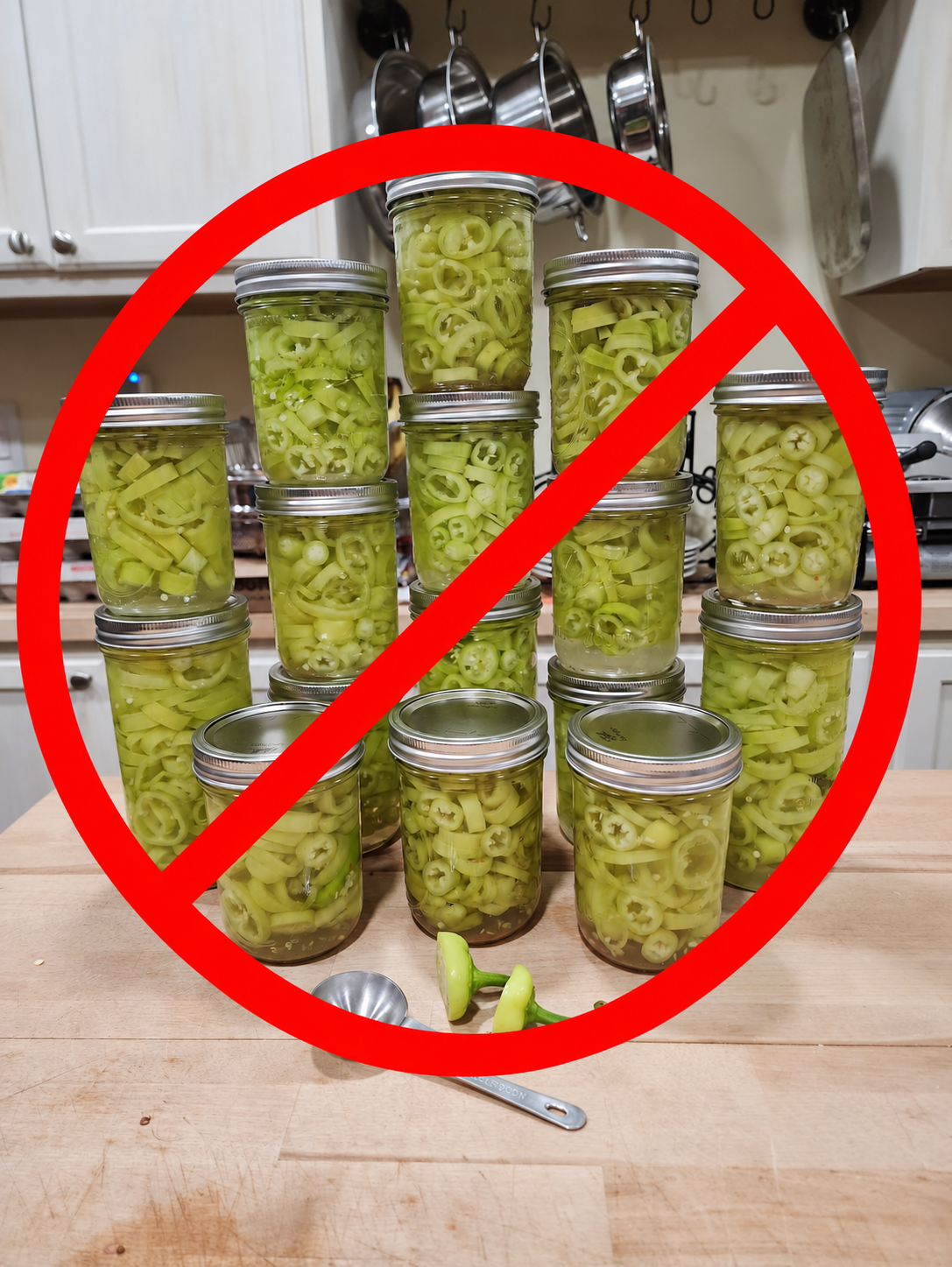
If I catch a failed seal during that first check the next day and I’ve followed a tested canning recipe, I refrigerate the jar right away and use it within a few days. The jars that sealed get washed, dried, labeled, and lined up in the pantry with their rings off. And my hubby? He gets dibs on the one we’re opening first. He’s been waiting a whole day to get his hands on it.
What are you pulling out of the freezer to can this fall? And please tell me somebody else has a lid poker in the house!


